As the inventory fills up, the detail starts. It does not wait for every inventory to finish: as soon as a process is in the inventory, it can be mapped. The process owner and one or two practitioners describe it, in 20 to 40 minutes.
Where: the Value Chain. Click a process card, and the process interview opens in its own thread.
What to map first
- Every step of the end-to-end processes, without exception. They matter for sure, because they cross teams and carry the customer, and a chain with one unmapped step cannot be analysed as a whole.
- Then the other priority processes, the ones with the most hours and pain in the inventory.
How it runs
Attach what exists first: a procedure, a checklist, a diagram, a recording. kawaru.app turns diagrams and documents into a draft, so the interview covers only the gaps.
The interview then goes through the trigger, each step, who does it, which systems, how long it takes, what comes in and goes out, the decisions and the end state. kawaru.app reads the map back, and the person confirms or corrects it.
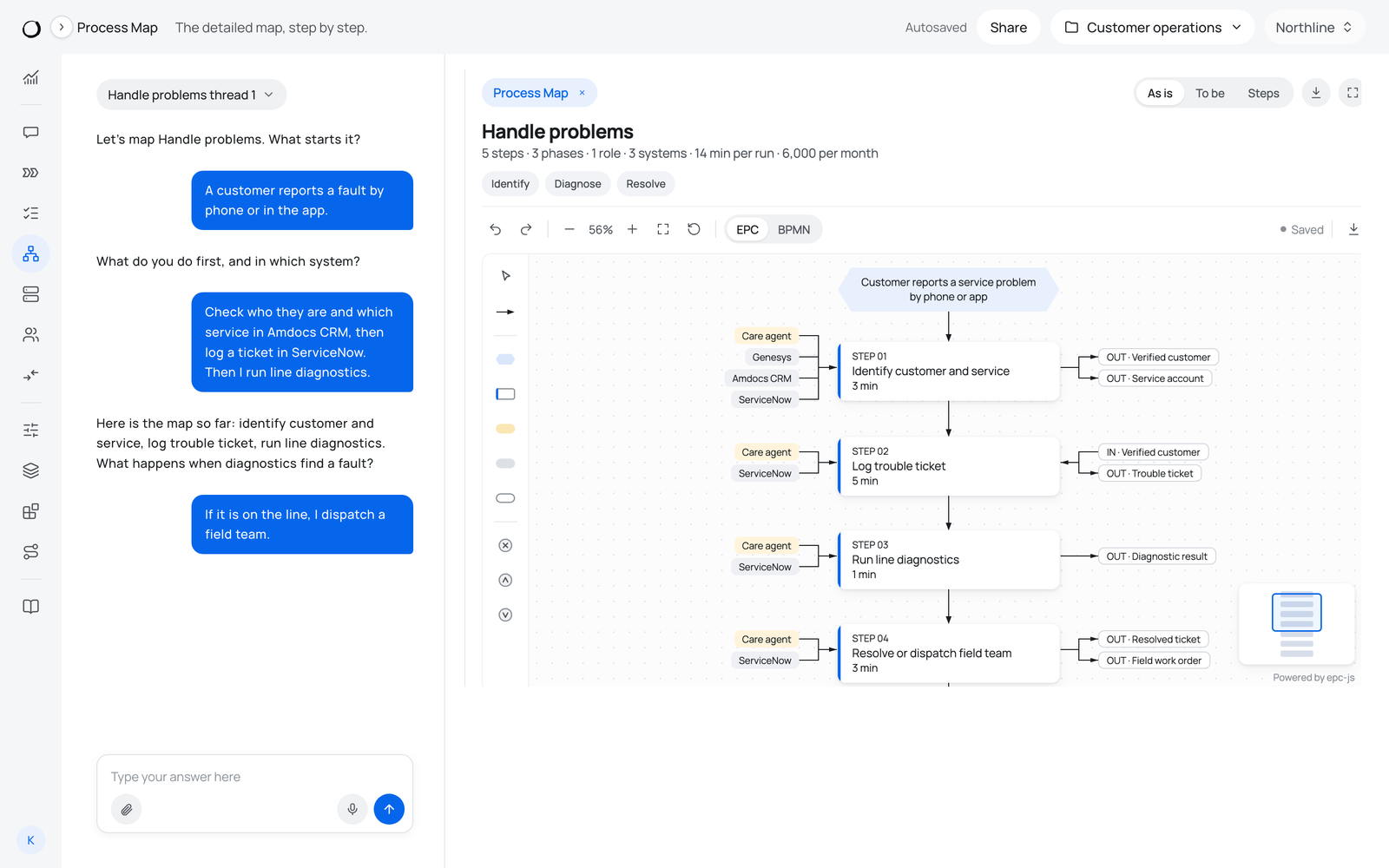
Result: a detailed Process Map for each mapped process. Systems and Roles fill in from the maps, and every step is assessed automatically. On the Value Chain the card shows mapped and, where several people told it, "2 versions".
Why this step: the inventory says where the time goes, the map says how the work happens. Decisions about tools and agents are made per step, so they need this level of detail.
When several people describe one process
kawaru.app looks for a match by meaning, not only by name, and asks the person whether it is the same process. If yes, their description becomes a second version and the Value Chain still shows one card. If no, a new process appears.
Where versions differ, someone has to decide: Review.
Tips
- Describe the process as it runs on a normal day, workarounds included, not as the policy says it should run.
- Bring a practitioner when the owner does not run the process daily. Their description becomes a version of the same process.
- Check the handovers: what comes in from the previous team and goes out to the next should match.
Done when the map is confirmed and its handovers match the steps before and after it.