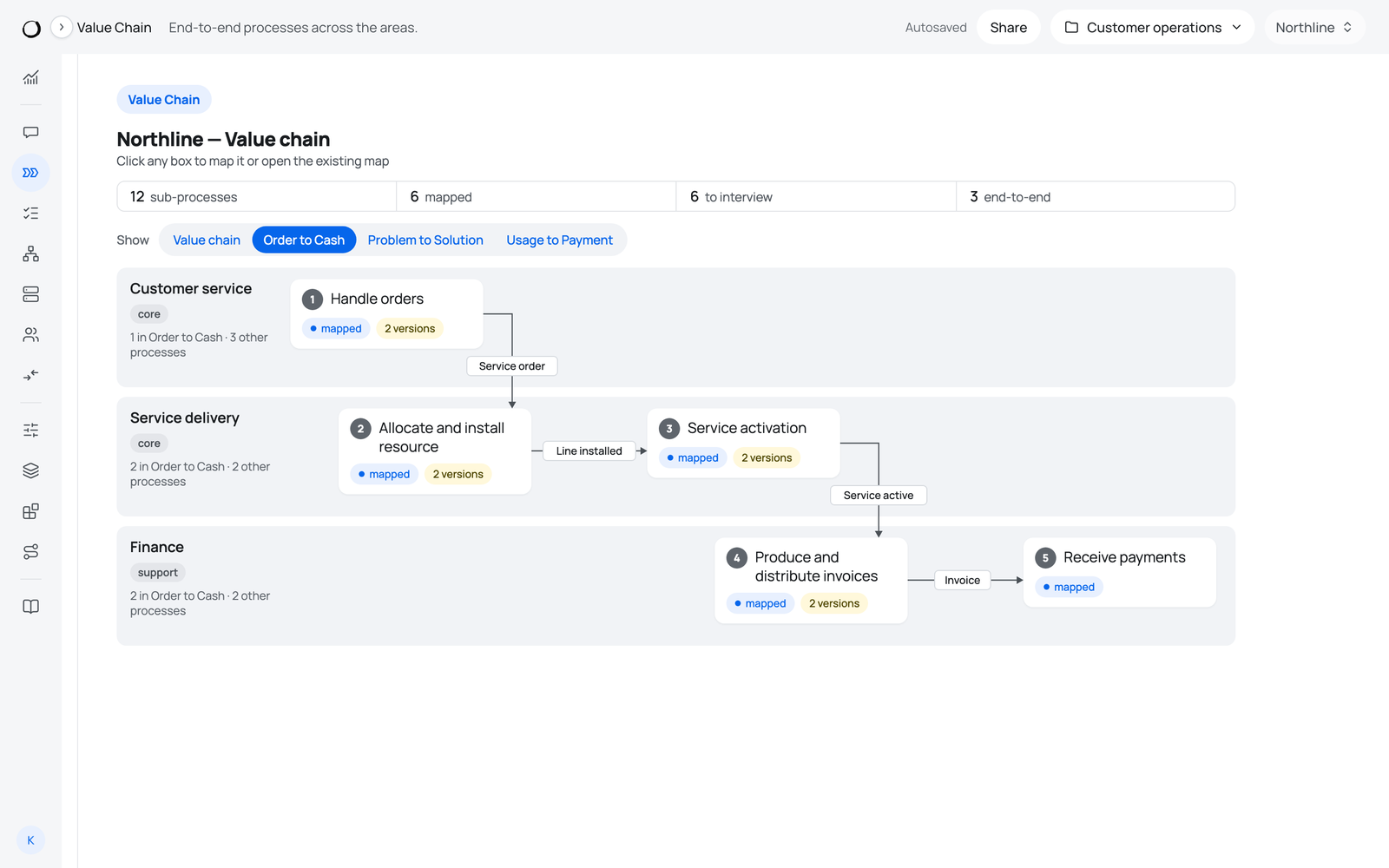
With the areas in place, the lead defines the end-to-end processes: the processes that bring value to the organisation, from a customer's request to its result. Order to Cash is one: an order travels from customer service to delivery to billing.
They come before any invitation, because they show who has to be interviewed.
Where: a separate thread, End-to-end processes, with the Value Chain beside it.
How it runs
kawaru.app proposes the chains usual for the industry and asks which ones the company runs, and whether it has any of its own. For each chain it shows one card: the steps in order, the area of each step, the role that usually does it, and what is handed over between steps. The lead confirms the card, or types corrections.
Then kawaru.app asks only what it cannot know: who does each step here, as a job title and a person to talk to.
In the example the lead picks Order to Cash:
- Handle orders, in Customer service
- Allocate and install resource, in Service delivery
- Service activation, in Service delivery
- Produce and distribute invoices, in Finance
- Receive payments, in Finance
The handovers are the service order, line installed, service active and the invoice.
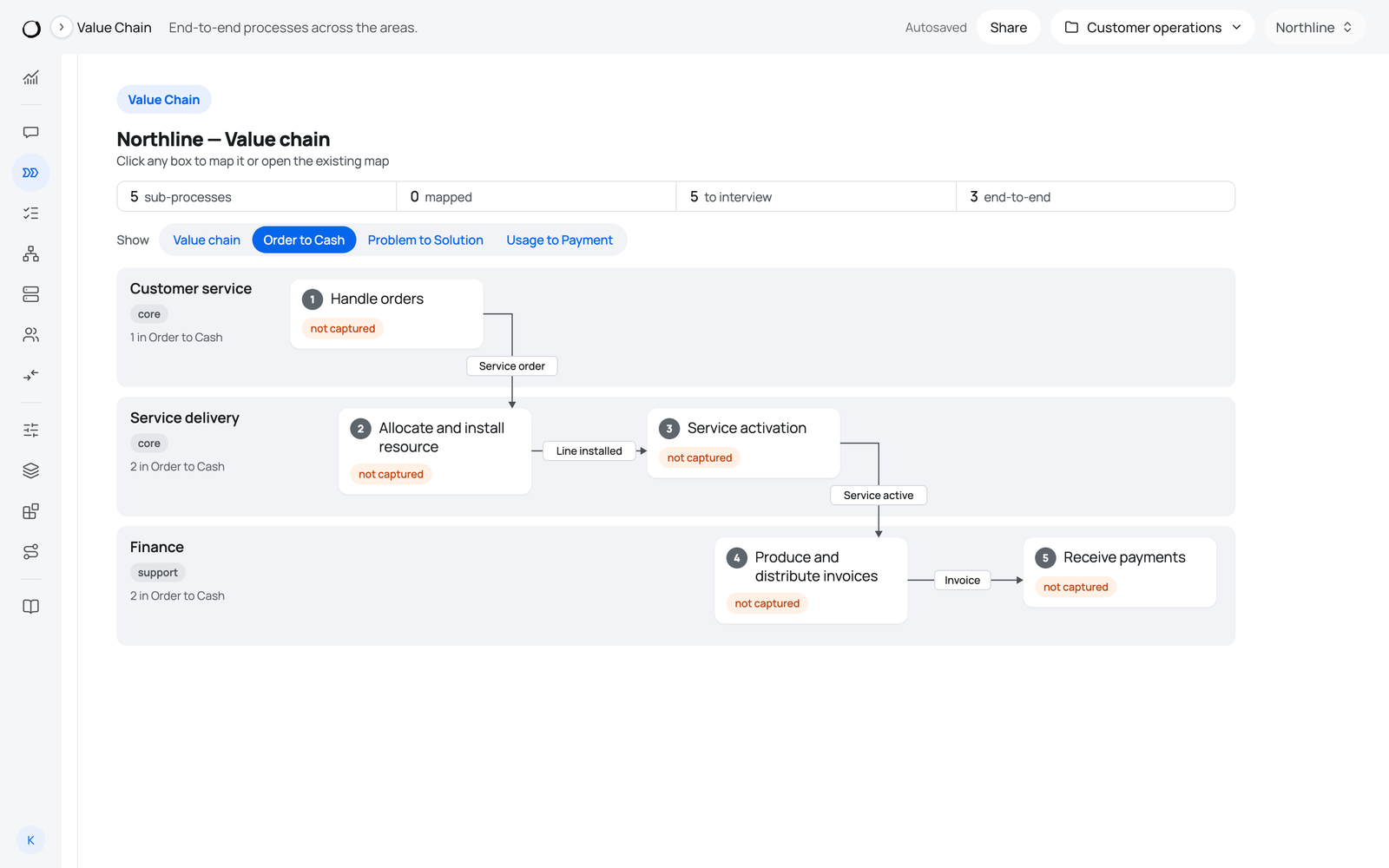
Result: each step appears as a "not captured" card in its area, and the Value Chain gets a Show switch to view the chain with its arrows. kawaru.app also holds a list of people, each with the steps they were named for. That list is where the invitations start.
Why this step: work is often lost between teams, not inside them. Setting up the chains first shows which teams must be covered and who to invite, before a single interview starts.
After the interviews
Every step of every chain has to be captured in the inventory. A step still marked "not captured" needs someone invited for it.